
Sex Offender Checks in Lackawanna County
The Pennsylvania Megan's Law Public Website is the authoritative starting point for a Lackawanna County sex offender search. Pennsylvania State Police maintain the public registry and provide name, county, city, ZIP, address, radius, map, and list routes. A county filter is useful for a broad view. An address search is better for a home, school route, or neighborhood. A name search helps when the person is already known. Each route queries the same state system, so a separate Lackawanna County sheriff list is not needed.
Prepare a full name, likely alias, year of birth, or address before searching. Names alone can match more than one person. Compare the photograph, aliases, physical description, reported locations, offense information, and latest update. PSP states that fingerprints establish positive identity, while public profile details are aids. The registry is also distinct from a court docket or a broad criminal record. It reports people subject to registration and public notice, not every criminal case in the county.
The official Lackawanna County result view shows how the public registry frames county-filtered results.
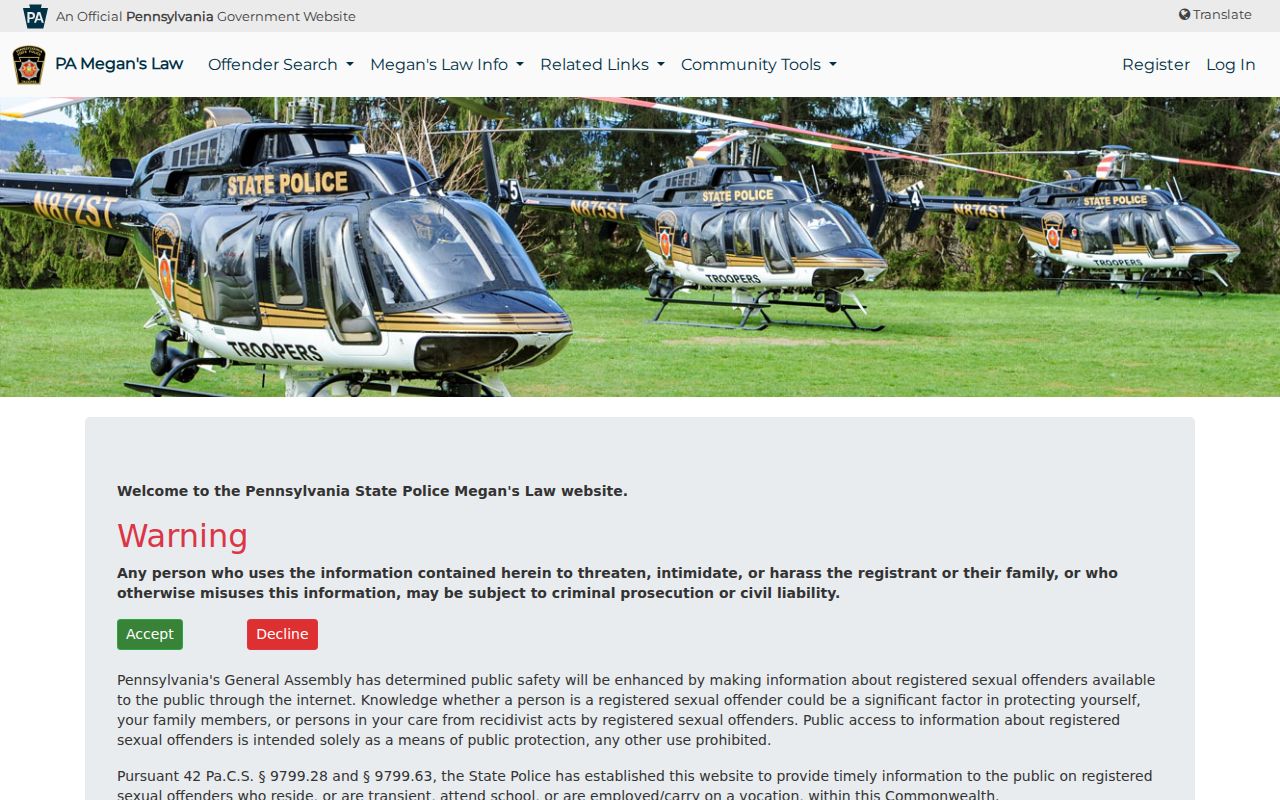
This county view is a starting list, not proof that every person displayed is near a specific address or that no recent move is pending.
Lackawanna Registry Search Routes
Geographic and name tools answer different safety questions. Use the county route to survey reported Lackawanna County locations. Enter a city or ZIP to narrow the area. For a specific point, use the address and radius controls, then read the map together with the profile. A name route can use first and last names, but the live help governs whether a partial spelling is accepted. The Search and Clear buttons run or reset the request.
The official registry landing screen presents these search choices after the user acknowledges the conditions.
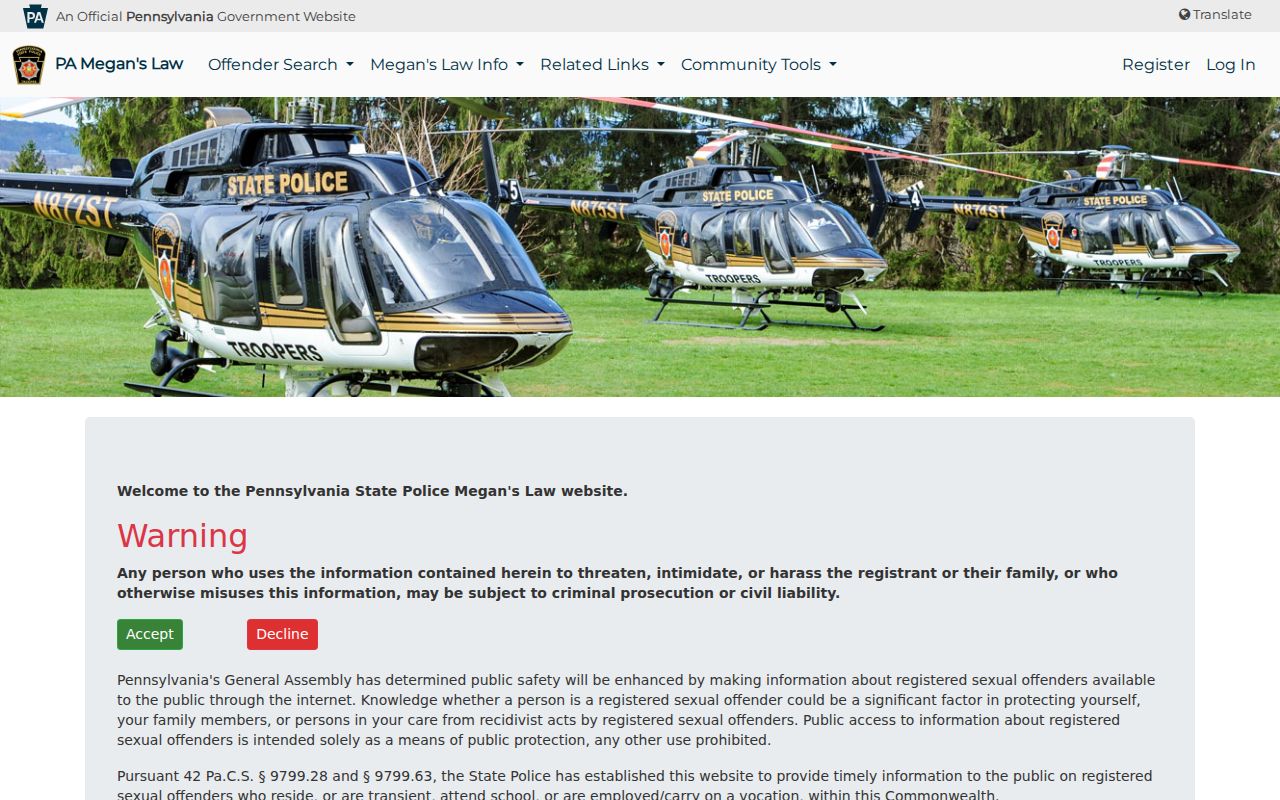
The search screen keeps name and place routes together, which makes it easier to confirm a broad county result with a tighter address or identity query.
How to Search the Pennsylvania Megan's Law Public Website
Use the state registry itself rather than a commercial copy. The official interface provides the current public fields, usage terms, profile status, and mapped locations where available.
- Open the PSP registry and acknowledge its terms of use.
- Choose a name search or select county, city, ZIP, address, and radius controls for a geographic search.
- Review the list or map, then compare several identifiers before selecting a likely profile.
- Open the profile and check the latest update, compliance status, locations, offense data, photograph, and aliases.
The available controls keep a Lackawanna County registry search flexible without turning it into a general criminal-history query.
| Field Label | Type | Required | Notes |
|---|---|---|---|
| Search mode | Tabs | Yes | Name or geographic search |
| First and last name | Text | Conditional | Used for the name route |
| County | Dropdown | Conditional | Select Lackawanna |
| City or ZIP | Text | Conditional | Geographic alternatives |
| Address and radius | Address and dropdown | Conditional | Supports proximity and map results |
| Search or Clear | Buttons | No | Runs or resets the request |
Lackawanna County Registry Address Alerts
PSP also explains email and address alerts in its registry help. A user can label an address and choose notification preferences. This is useful for ongoing community awareness because a one-time map check can become stale. Alerts still depend on registration reports and system updates, so they do not replace ordinary safety planning or direct notice from law enforcement.
The PSP Megan's Law FAQ describes alert setup, public fields, update duties, and where to report a concern.
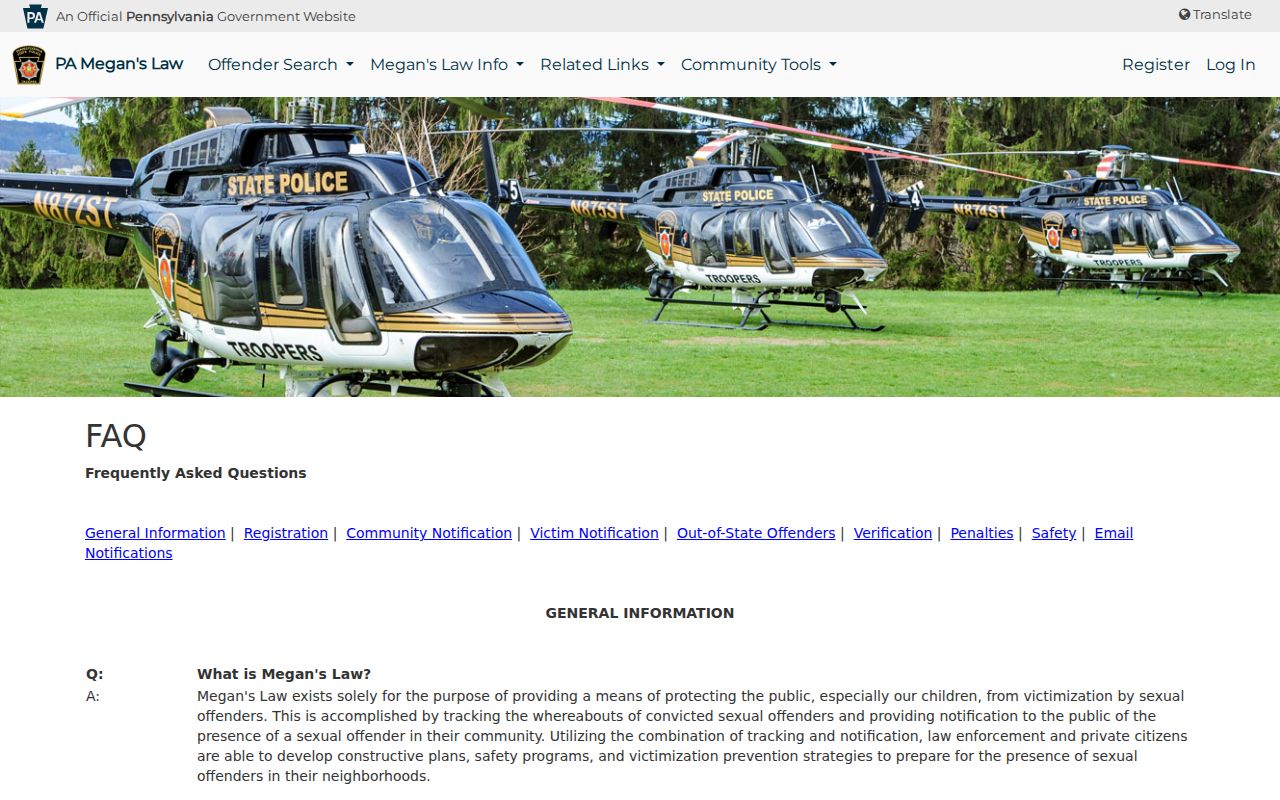
The FAQ gives context that a result list cannot, especially when a reader needs to understand a status label, alert, or recent location change.
Note: An alert reflects registry data received by PSP; it is not a real-time tracking service or an emergency notification system.
Inside a Registry Profile
A Pennsylvania public profile combines identity aids, reported locations, registration facts, and offense details. It may list more than a residence. Temporary lodging, work, and school locations can appear, and a transient status may replace a fixed home. The activation and latest-update dates help the reader judge currency. Public fields should be read together, because a shared name or similar age is not enough for a sound match.
| Name and aliases | Current name and other reported names used to distinguish records |
|---|---|
| Photo and description | Photograph, sex, year of birth, height, weight, race, hair, eyes, and identifying marks |
| Reported locations | Residence or transient status, temporary lodging, work, school, and mapped points where possible |
| Vehicles | Reported plate and vehicle description |
| Offense information | Registrable offense, other registrable convictions, minor-victim indicator, and conviction date when available |
| Registry status | Compliance, activation, and latest-update information |
PSP does not present a tier as a consumer danger score. Pennsylvania categories follow qualifying offenses and statutory rules. A profile is also not a full account of every arrest, charge, or court event. For filed case outcomes, use the official docket and read each count's disposition.
Lackawanna Registry and NSOPW
The PSP registry is best for a Pennsylvania profile and current state guidance. The National Sex Offender Public Website, run by the U.S. Department of Justice, adds a cross-state search across participating jurisdictions. NSOPW helps when a person may have moved across a state line or when a search area reaches beyond Pennsylvania. Return to PSP to verify a Pennsylvania result and read its current state profile.
The national portal's interface is shown through its official search page.
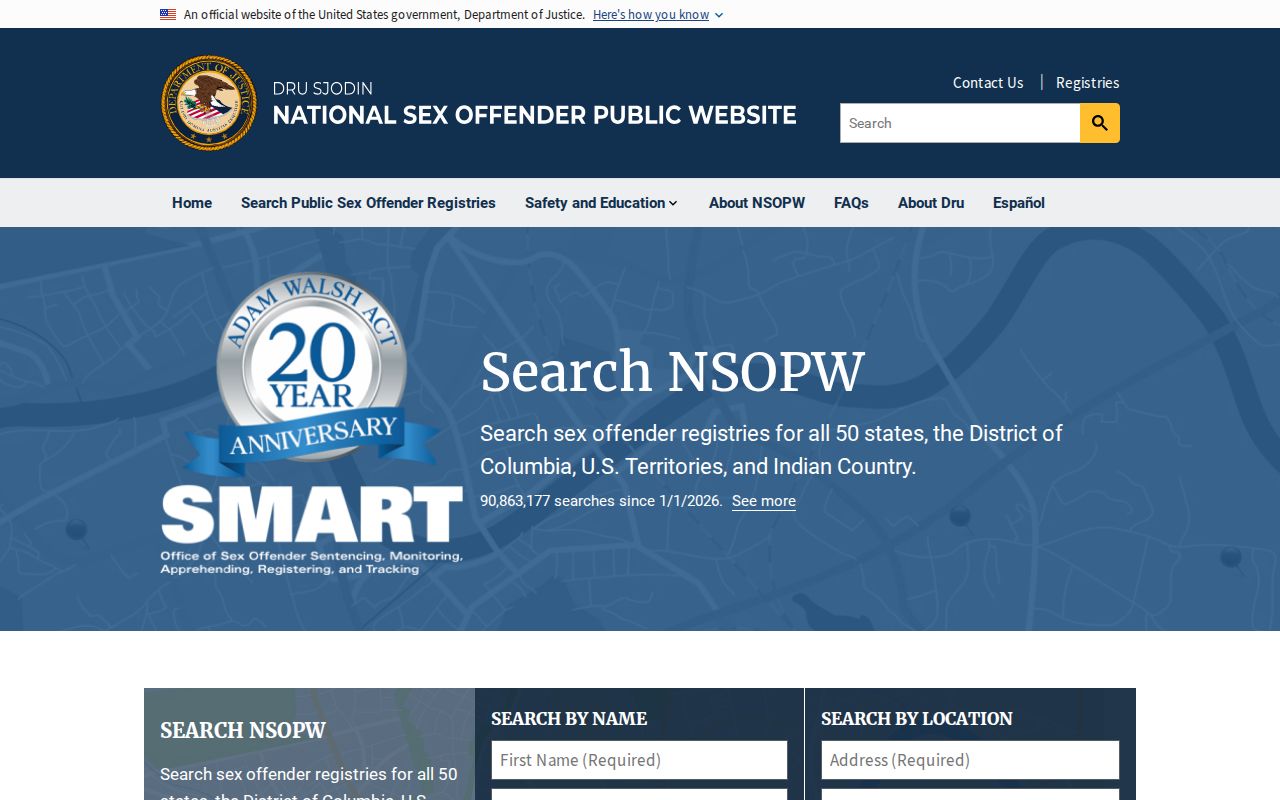
This broader layer expands the geographic reach but does not replace the detail and Pennsylvania-specific instructions maintained by PSP.
Pennsylvania Registration Levels and Requirements
Pennsylvania's tier schedule is offense-based. Tier I generally requires annual verification for 15 years, Tier II semiannual verification for 25 years, and Tier III quarterly verification for life. Sexually Violent Predators and sexually violent delinquent children also have lifetime, quarterly requirements. A separate legacy Subchapter I category can require ten years or life, and transient registrants may report more often.
| Category | Duration | Periodic Verification |
|---|---|---|
| Tier I | 15 years | Annually |
| Tier II | 25 years | Semiannually |
| Tier III | Lifetime | Quarterly |
| SVP or sexually violent delinquent child | Lifetime | Quarterly |
| Legacy Subchapter I | 10 years or life | Generally annual; transients more often |
Specified changes to a name, home, work or school, contact data, vehicle, temporary lodging, internet identifiers, and professional licenses commonly must be reported within three business days. International travel has advance duties. The registration provisions and qualifying crimes are summarized on the PSP registration-crimes page.
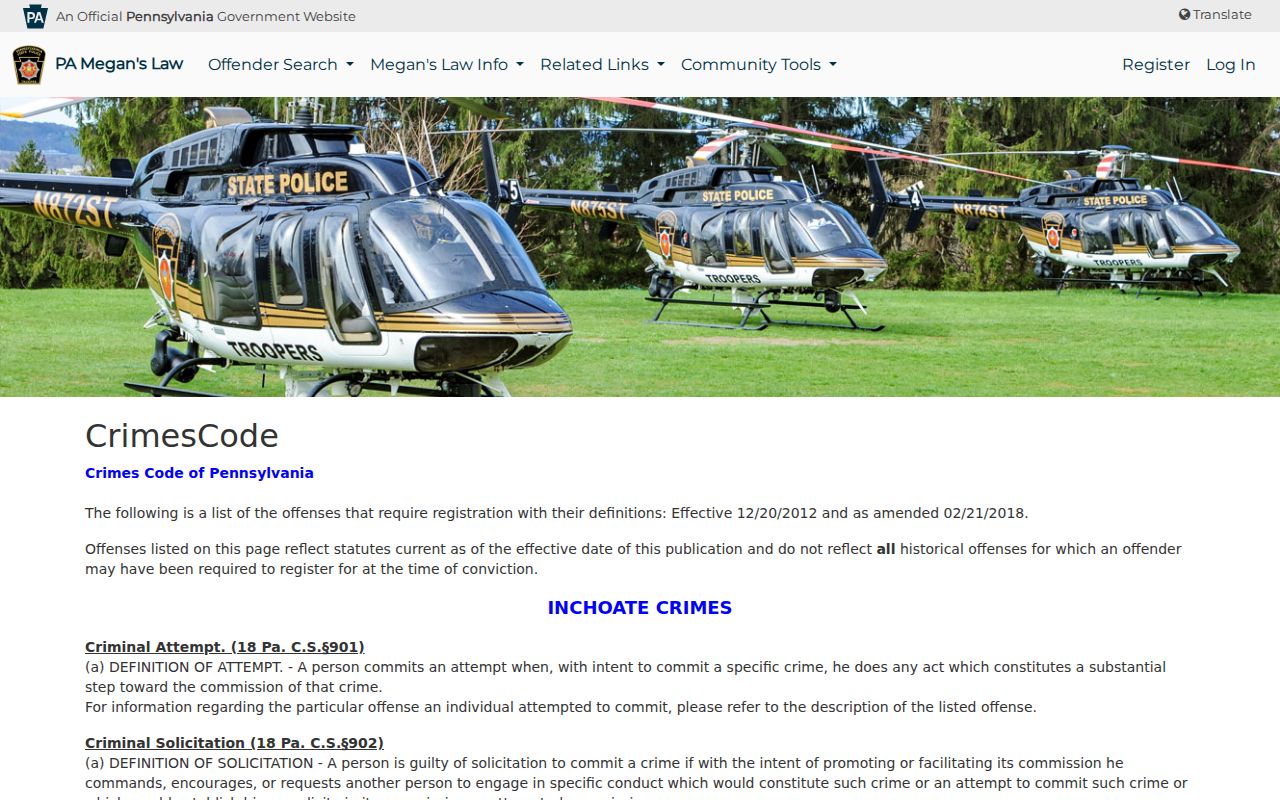
That official list links the public profile categories to the Pennsylvania statutes that create registration duties.
Periodic verification and change reporting are separate duties. A scheduled annual, semiannual, or quarterly appearance does not replace the need to report a qualifying change within the required time. Some eligible people may complete specified nonannual checks by telephone after a compliant period, but annual in-person verification and change notices still apply. The live PSP instructions control each case.
Lackawanna Registry Location Limits
Pennsylvania Megan's Law does not create a general statewide distance rule that bars every registrant from living near a school or park. An individual sentence, probation or parole condition, or a lawful local rule may impose limits. Do not infer illegality from a map pin alone. The registry shows reported public-notification locations, not every condition in a court or supervision file.
Map precision has practical limits too. A recent move, temporary lodging, transient status, address quality, and reporting lag can affect the display. Check the profile's active and latest-update fields. If a location seems wrong, report it through official channels. Public confrontation cannot verify a record and may create risk.
Lackawanna County Registry Noncompliance
Suspected failure to register or an inaccurate location should go to local police and the Pennsylvania State Police Megan's Law Section at 1-866-771-3170. Give the agency a clear description of the concern and the profile information needed to identify the record. Failure to register or update can be prosecuted under 18 Pa.C.S. §§4915.1 and 4915.2. A tip is not a public finding of guilt, so let investigators confirm the facts.
The official history of Pennsylvania Megan's Law traces the public-notification system and later statutory changes.
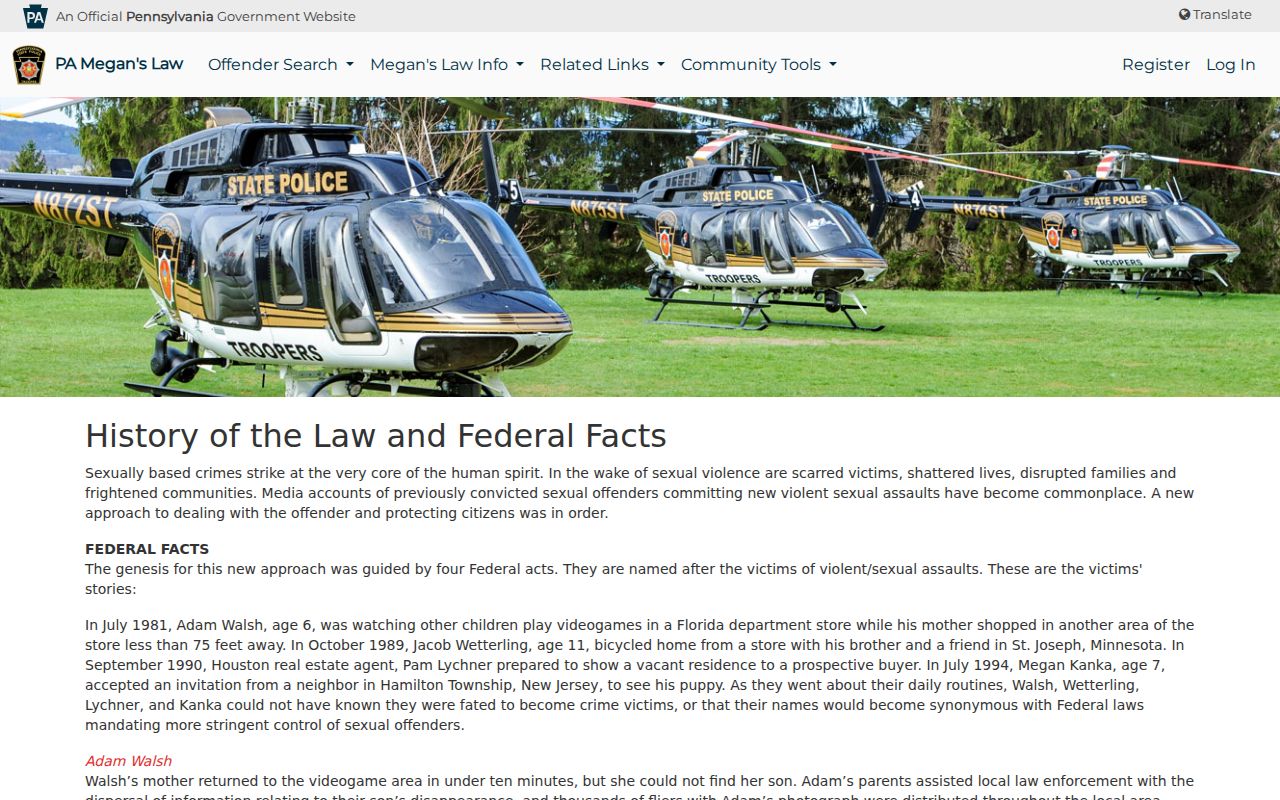
The history explains why registration, public notice, verification, and enforcement are distinct parts of the same state system.
Community Notification and Lawful Use
Registry information is published for protection and informed safety planning. It can support a neighborhood check, family discussion, address alert, or question to law enforcement. It should never become a tool for threats, intimidation, harassment, or vigilante action. PSP warns that misuse may lead to criminal prosecution or civil liability. Share the official registry link rather than copying a private address into a local post, and allow the state profile to reflect later corrections.
Use registry records lawfully: Pennsylvania State Police warns that threatening, intimidating, harassing, or otherwise misusing registry information can lead to criminal prosecution or civil liability. Report concerns to police or PSP, never through confrontation.
A Lackawanna County sex offender search is one part of practical safety awareness. It cannot predict conduct, prove a map is current to the minute, or serve as a complete criminal record. Verify important details through PSP and the agency that maintains the original information.