
Lackawanna County Criminal Court Cases
The Unified Judicial System of Pennsylvania Web Portal reflects the county's two-stage criminal court structure. Most complaints start before a magisterial district judge, or MDJ. That court handles the first appearance, bail, and the preliminary hearing. Felonies and misdemeanors held for court advance to the Lackawanna County Court of Common Pleas, Pennsylvania's 45th Judicial District. Summary cases and many traffic matters can remain at the MDJ level.
A Common Pleas criminal docket uses a number such as CP-35-CR-0000593-2022. “CP” identifies Common Pleas, “35” identifies Lackawanna County, and “CR” marks the criminal docket category. The last parts are the sequence and filing year. The Clerk of Judicial Records maintains the Common Pleas file. A city police department, county prison, or sheriff does not replace that court custodian.
Lackawanna Criminal Courts Compared
Choosing the wrong court is a common reason a case seems missing. Scranton, Dunmore, and Carbondale do not run separate municipal criminal courts. Their cases use Pennsylvania's MDJ system and, when held for court, the same Lackawanna County Common Pleas path. A new complaint can exist only at the MDJ level for a time.
| Court level | What appears there | Best next step |
|---|---|---|
| Magisterial district court | Complaint, preliminary arraignment, bail, preliminary hearing, and summary matters | Search the MJ docket or call the assigned MDJ |
| Court of Common Pleas | Criminal information, pleas, motions, trial events, disposition, and sentence | Search the CP-35-CR docket and contact the Clerk |
Use the event address and originating court when several MDJs could be involved. If a charge was held for court, the Common Pleas docket should name the originating MDJ docket and the offense tracking number, called the OTN.
Searching Lackawanna County Case Records
The UJS portal is free and does not require an account for public docket sheets or calendars. An exact docket is best. When it is unknown, use the participant search with at least first name, last name, and Lackawanna County. An OTN or police incident number can connect the filing to a police or booking record.
- Open Case Search and choose Court of Common Pleas or Magisterial District Courts.
- Select Lackawanna County, then enter the docket number or participant name.
- Narrow a broad result by filing dates, court, and case status.
- Open the docket-sheet PDF and compare the OTN, complaint number, charges, and dates.
- Ask the Clerk or specific MDJ for a copy or certified document not available online.
| Field label | Type | Required | Notes |
|---|---|---|---|
| Search Type | Tabs or dropdown | Yes | Docket, participant, organization, OTN, or police complaint number |
| Court Type | Dropdown | Yes | Select Common Pleas or Magisterial District Courts |
| County | Dropdown | Conditional | Lackawanna is county code 35 |
| Docket Number | Segmented text | Conditional | Use the full CP or MJ number |
| Participant Name | Text | Conditional | First and last name are the practical minimum |
| Date Filed | Date range | No | Helps narrow common names |
Missing Lackawanna Criminal Cases
A blank result does not prove that no record exists. The complaint may still be at an MDJ while the search is set to Common Pleas. A former name, alias, wrong county, or narrow date range can also hide the match. Try the OTN or police incident number when those identifiers are known. The “Miscellaneous” Common Pleas category may hold bail appeals, contempt, search-warrant matters, or related motions rather than an ordinary CR prosecution.
Some files are not public by law or court order. Juvenile, sealed, expunged, pending-expungement, limited-access, and destroyed matters may be excluded. A paper file can also remain with the MDJ when no useful PDF appears. The correct escalation is that court office, not a broad county Right-to-Know request.
The Pennsylvania court public-records policies explain why judicial records follow court access rules. The captured policy view shows the statewide framework that controls Lackawanna County case access.
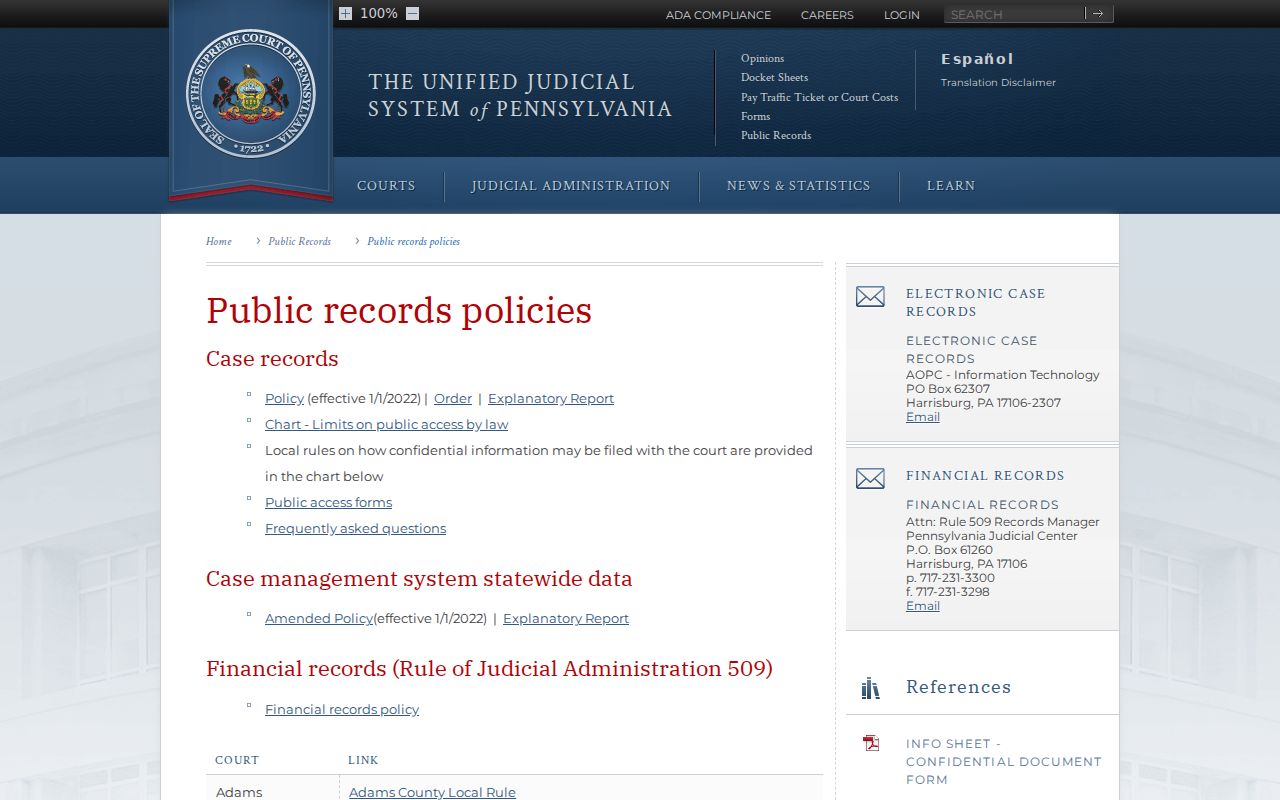
That policy layer also explains why an executive-agency RTKL request is not the normal route to a complaint, order, or certified disposition.
Inside a Lackawanna County Case File
A public docket is an index to the prosecution, not a full scan of every paper. Begin with the caption and status block. Then compare the originating MDJ docket, OTN, and police complaint number. Read each count on its own because the grade and disposition can differ from one count to the next. Calendar events show scheduled appearances. The docket chronology records what was filed or ordered.
| Case Number & Court | Identifies the court level, Lackawanna code, docket category, sequence, and year |
|---|---|
| Charging Document | The complaint starts the case; a criminal information states charges in Common Pleas |
| Docket Entries | A dated chronology of filings, orders, pleas, rulings, and post-sentence activity |
| Hearing Dates | Events such as arraignment, conference, hearing, trial, or sentencing and their status |
| Disposition | The result for each count, including plea, verdict, dismissal, or nolle prosequi |
| Sentence | Confinement, probation, credit, restitution, costs, and relationships among counts |
Financial pages show assessments and balances, but the Clerk should confirm a current payoff. Protected personal data is redacted, and complaints, motions, exhibits, or orders may require a direct copy request.
Read the docket terms with care. “Held for court” means a charge advanced from the MDJ to Common Pleas. “Nolle prosequi” means the prosecutor ended that charge. Concurrent sentence terms run together, while consecutive terms run one after another. A recognizance bond rests on a promise to appear rather than posted security. These labels describe distinct events in a Lackawanna County criminal case, so none should be read without its date, count number, and later entries.
Certified Lackawanna Court Dispositions
When the exact outcome matters, request a certified disposition from the Clerk of Judicial Records Criminal Division. Provide the complete CP-35-CR docket and name the document. Ask about page charges, certification, retrieval, and mailing before ordering. Older or non-electronic material may need staff retrieval.
Clerk of Judicial Records
Criminal Division
Lackawanna County Courthouse
200 N. Washington Ave.
Scranton, PA 18503
570-963-6800 county main line
A certified disposition can help correct a missing outcome in a Pennsylvania State Police record. Match the docket's OTN and complaint number to the arrest cycle before submitting the court paper as evidence.
How a Lackawanna Criminal Case Moves
Police file a complaint at the preliminary level. An MDJ then addresses the first appearance and bail. At a preliminary hearing, the Commonwealth must meet the threshold for charges to proceed, or the defendant may waive that hearing. When a case is held for court, the transcript reaches the Clerk and a CP-35-CR docket is created. The District Attorney files a criminal information, followed by formal arraignment and pretrial work.
Case flow: Charges Filed › Arraignment › Pretrial › Plea or Trial › Disposition › Sentencing
A plea, trial result, dismissal, or nolle prosequi resolves each count. Sentencing follows when there is a conviction. Appeals and post-sentence filings can add later docket entries. The caption can remain visible even if all counts were dismissed, so never treat a case name alone as proof of guilt.
Federal Cases Near Lackawanna County
Federal cases use a separate system. Lackawanna County lies in the U.S. District Court for the Middle District of Pennsylvania, with a federal courthouse in Scranton. The Middle District court site identifies the correct federal venue and its services.
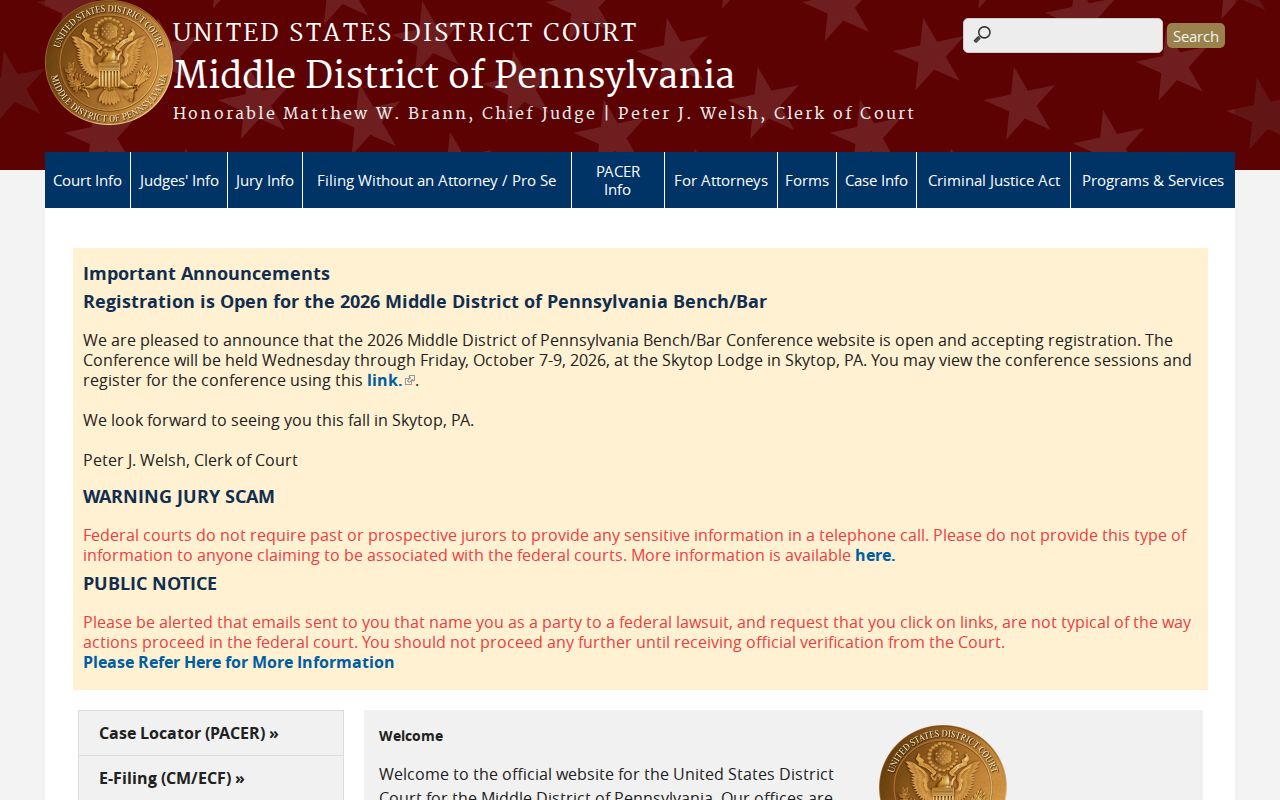
This federal court is outside the Lackawanna County CP-35-CR and MJ-45 docket path.
Filed federal dockets and documents are available through PACER after account registration, generally at the published per-page rate.
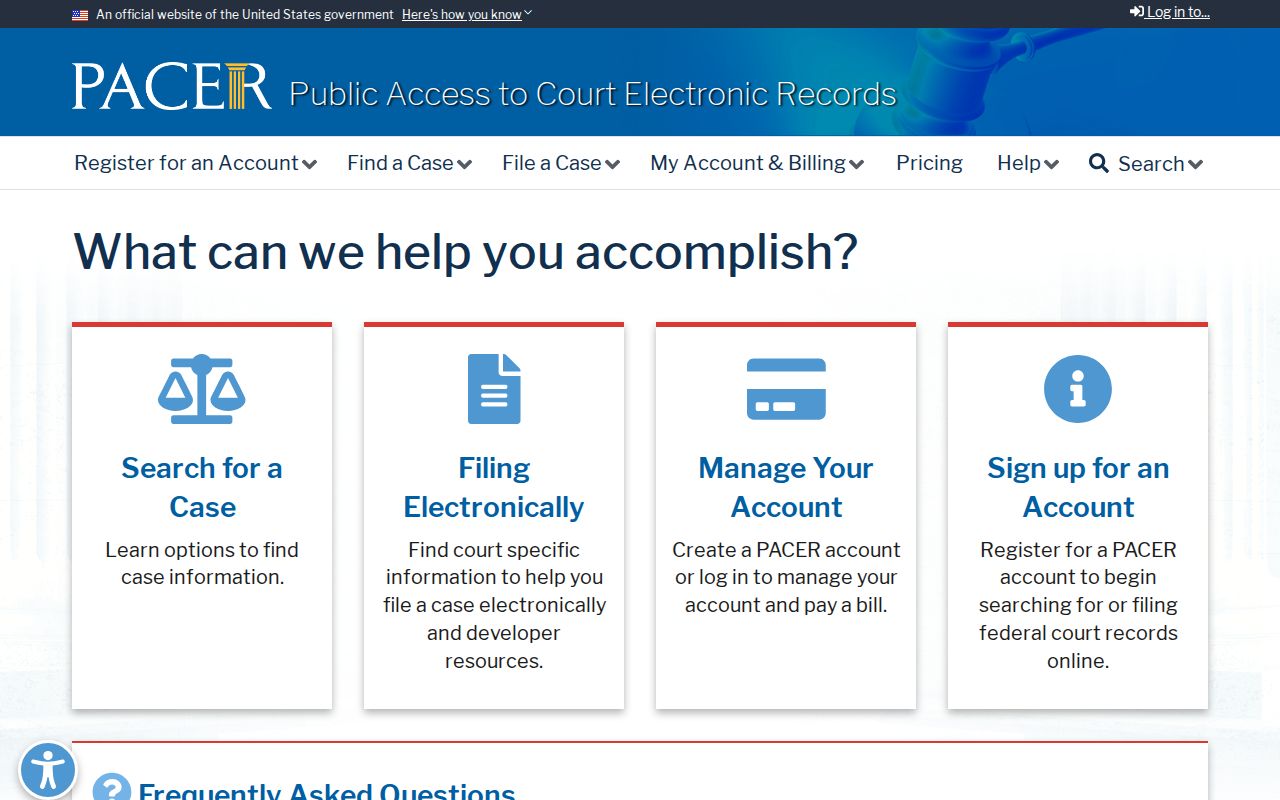
PACER does not search Lackawanna County Common Pleas files, and sealed federal warrants will not appear in an ordinary public search.
Case Record Access & Restrictions
Pennsylvania court files are broadly accessible, but access has limits. Public PDFs suppress protected identifiers. Juvenile records, victim information, sealed or expunged matters, and records under limited access are not ordinary public results. Investigative material can remain with police and may be withheld under Pennsylvania law. The court docket does not turn those separate files into public exhibits.
For a missing public record, first confirm the court level, spelling, county, and identifiers. Then contact the assigned MDJ or Clerk. For a paper that proves the result, request certification. These steps are more reliable than assuming an empty UJS result means the matter never existed.
Lackawanna County court staff can also explain whether the requested item belongs to a case file or an administrative record. That distinction controls the access route. State court rules apply to case records, while the Pennsylvania Right-to-Know Law generally addresses executive-agency and county administrative material. Neither path overrides a sealing order or juvenile confidentiality.
Federal Records Beyond Lackawanna Courts
After a federal sentence, the Federal Bureau of Prisons locator covers federal custody rather than the Lackawanna County Prison.
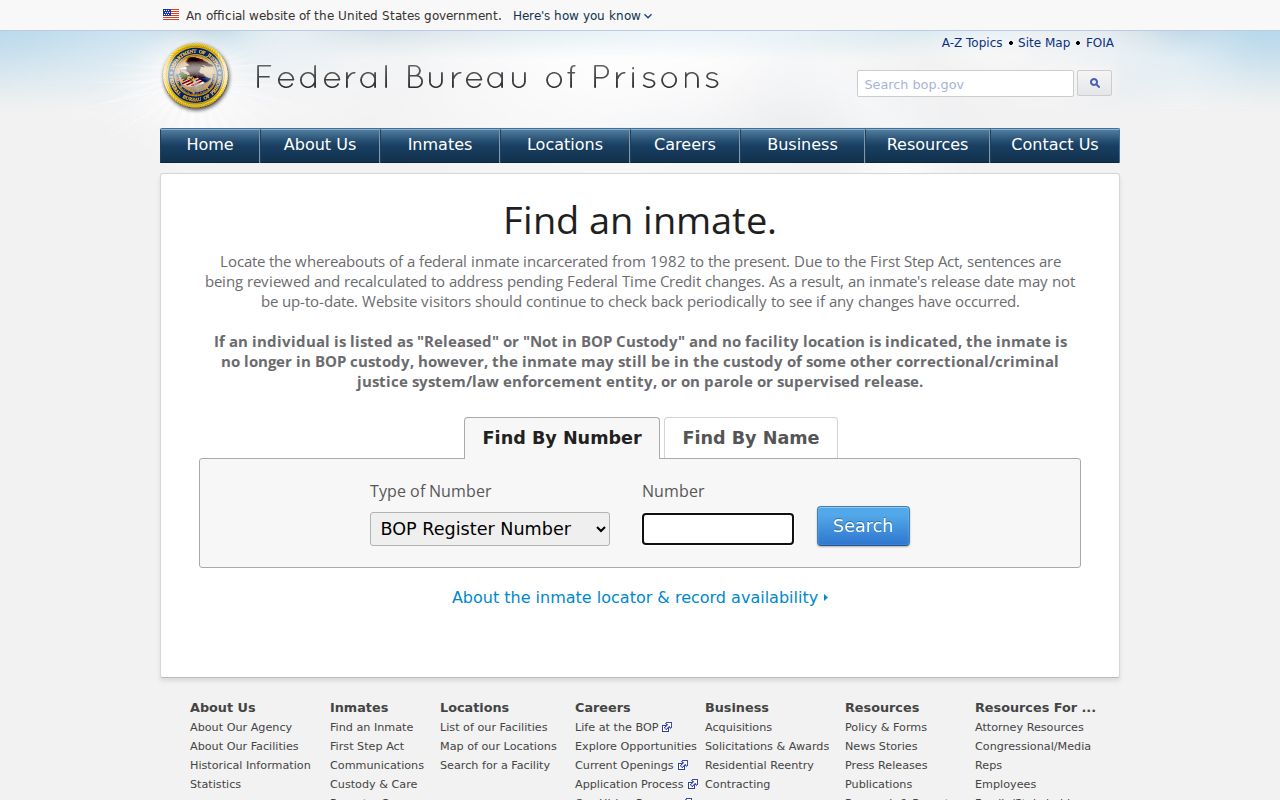
The custody locator answers where a federal person is held, while PACER answers what happened in the federal case.
For a subject's own FBI identity history, the official FBI electronic request portal supplies a different fingerprint-based product.
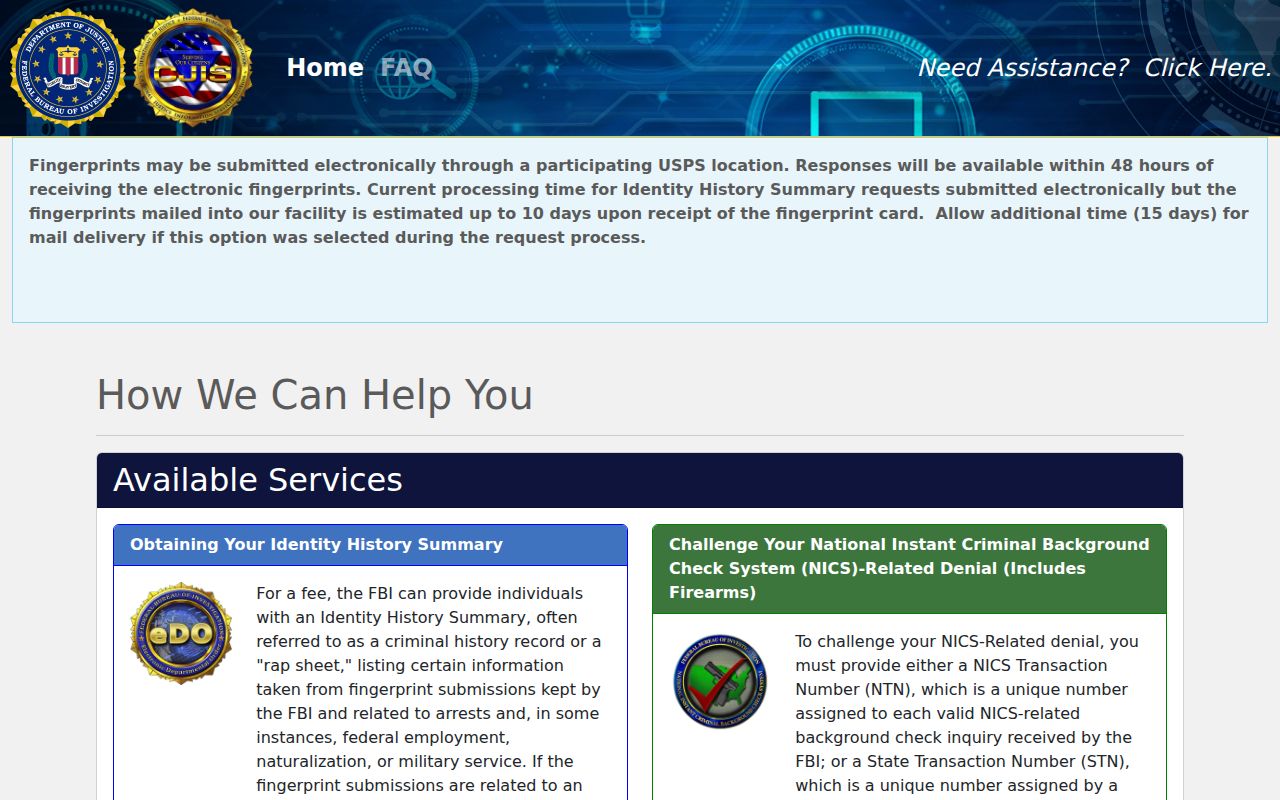
An FBI identity summary is not a substitute for the filed Lackawanna County docket or a certified Clerk record.